The manufacturing revolution
Raw materials in, robots out.
We're building the software and hardware that turn raw materials into complete, mission-ready robots. No assembly lines. No fragile supply chains. No compromises. Just exactly the machine the mission needs, and as many as the world needs.
01 · The problem
Machines are still built like it's 1926.
Every robot moves on actuators: the powered joints that combine a motor, gears, and electronics to drive an arm, a leg, a wing. Strip one open, even on the most advanced robot in the world, and you'll find a century-old recipe: hand-wound copper coils, laminated steel cores, precision-ground bearings, rare-earth magnets. Dozens of parts from dozens of suppliers, assembled by hand.
Every joint is a small supply chain. Every interface between parts is a future failure point. And the magnets at the heart of nearly every actuator on Earth come overwhelmingly from a single strategic competitor.
The robotics revolution is being built on a manufacturing foundation that can't support it.
02 · Our bet
There are two ways to fix it.
America can spend a decade rebuilding the old actuator supply chain on home soil, and race China on its own terms. Or it can make that supply chain obsolete.
Path one · Catch up
Onshore yesterday's actuator
Replicate the proven designs, import the machinery, rebuild the magnet and winding supply chain domestically. Necessary work, but it ends in parity at best, on a cost curve our competitor set.
Path two · Leapfrog
Our pathChange what an actuator is
Delete the assembly, the interfaces, and the magnet dependency. Don't race the old supply chain. Make it unnecessary, and let robotics grow as fast as it can be designed.
03 · The software
Software Defined Matter
You can't grow a machine you can't describe.
Leapfrogging the actuator starts in software. Software Defined Matter is our engineering framework for designing machines in code: the entire path from specification to working machine is designed and executed by software, and the output is a physical, multi-material object.
No hand-drawn CAD. No hand-authored meshes. Geometry, materials, objectives, and constraints are all code, and all differentiable, so the whole design loop is one graph that can be optimized end to end. CAD, evolved.
01 · Define
Write the intent, not the drawing.
A Computational Engineering Model captures what the machine must do: specifications, parametric geometry, materials, objectives, and constraints, all in code.
02 · Standardize
One file every tool can read.
The model compiles to a .sdm file: a portable description of shapes, materials, objectives, constraints, and how parts couple. Parameters survive the trip, so the next tool can still move them.
03 · Evolve
Let the physics shape the part.
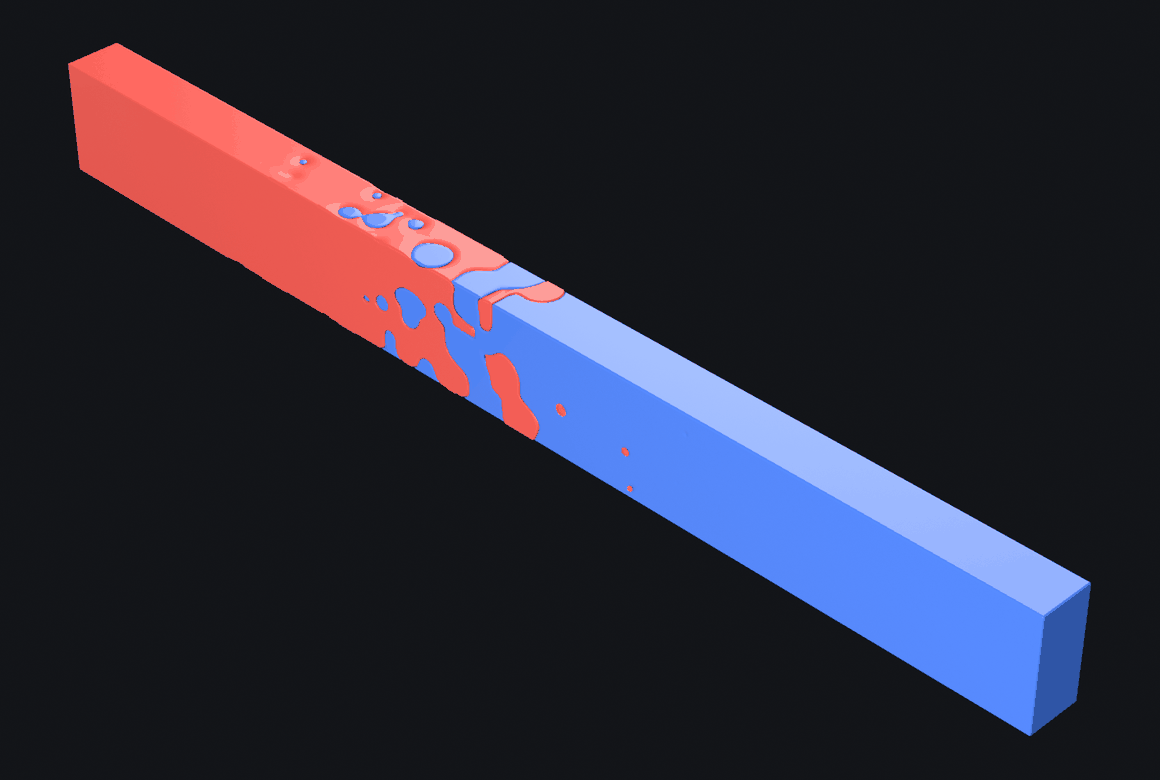
Gradients flow from a physics objective back through the shape itself. The design is optimized, validated, assembled, and exported as machine-ready geometry for the process that will make it.
# geometry is a signed distance field, not a mesh
outer  = sdf_primitive("capped_cylinder", h=30.0, r=ref("outer_radius"))
inner  = sdf_primitive("capped_cylinder", h=30.0, r=ref("inner_radius"))
shell  = sdf_op("subtract", [outer, inner])
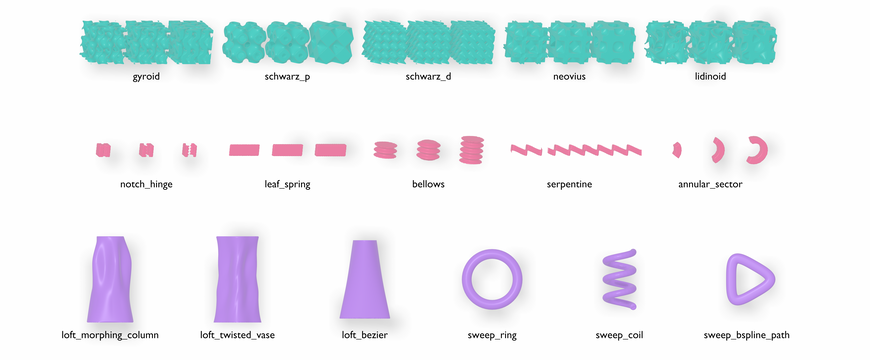
infill = sdf_op("intersect", [shell, sdf_primitive("gyroid", period=8.0)])
hinge  = sdf_primitive("notch_hinge", notch_radius=ref("notch_radius"))

part = Part(
  name="hollow_cylinder_with_hinge",
  materials=[
    MaterialRegion(name="Cu",  sdf_tree=hinge),
    MaterialRegion(name="PLA", sdf_tree=infill),
  ],
)
save(part, "hollow_cylinder_with_hinge.sdm")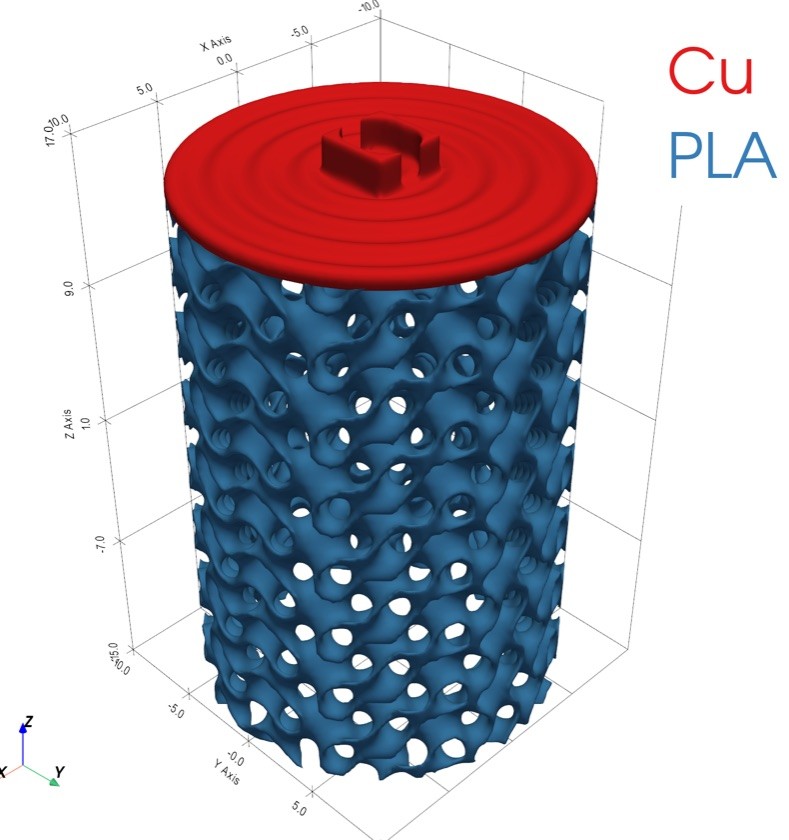
04 · One company
Software decides what to build. Hardware builds it.
Software · Software Defined Matter
Intent in.
A specification becomes a machine-ready design: geometry, materials, and physics optimized together, so every machine is designed for its mission instead of adapted from a catalog.
Hardware · Growing the machine
Raw matter in.
The process and machines that turn raw materials into that design: complete, multi-material robots, with no assembly line and no fragile supply chain between them and the mission.
05 · The vision
This is robotics' silicon-chip moment.
The silicon chip didn't just secure computing, it unleashed it. When circuits stopped being hand-assembled, computers stopped being rare. The same is about to happen to robots.
When a complete machine can be designed and manufactured from raw materials, robotics stops being rationed. Every farm, clinic, shipyard, and launch pad gets exactly the machine its mission needs: a Cambrian explosion of robots, designed in software, grown from raw matter, built on a foundation no one can pull out from under us.
Build exactly the machine the mission needs.
Working on robotics, defense, or advanced manufacturing? We'd like to hear what you need built.
hey@emergentmatter.com